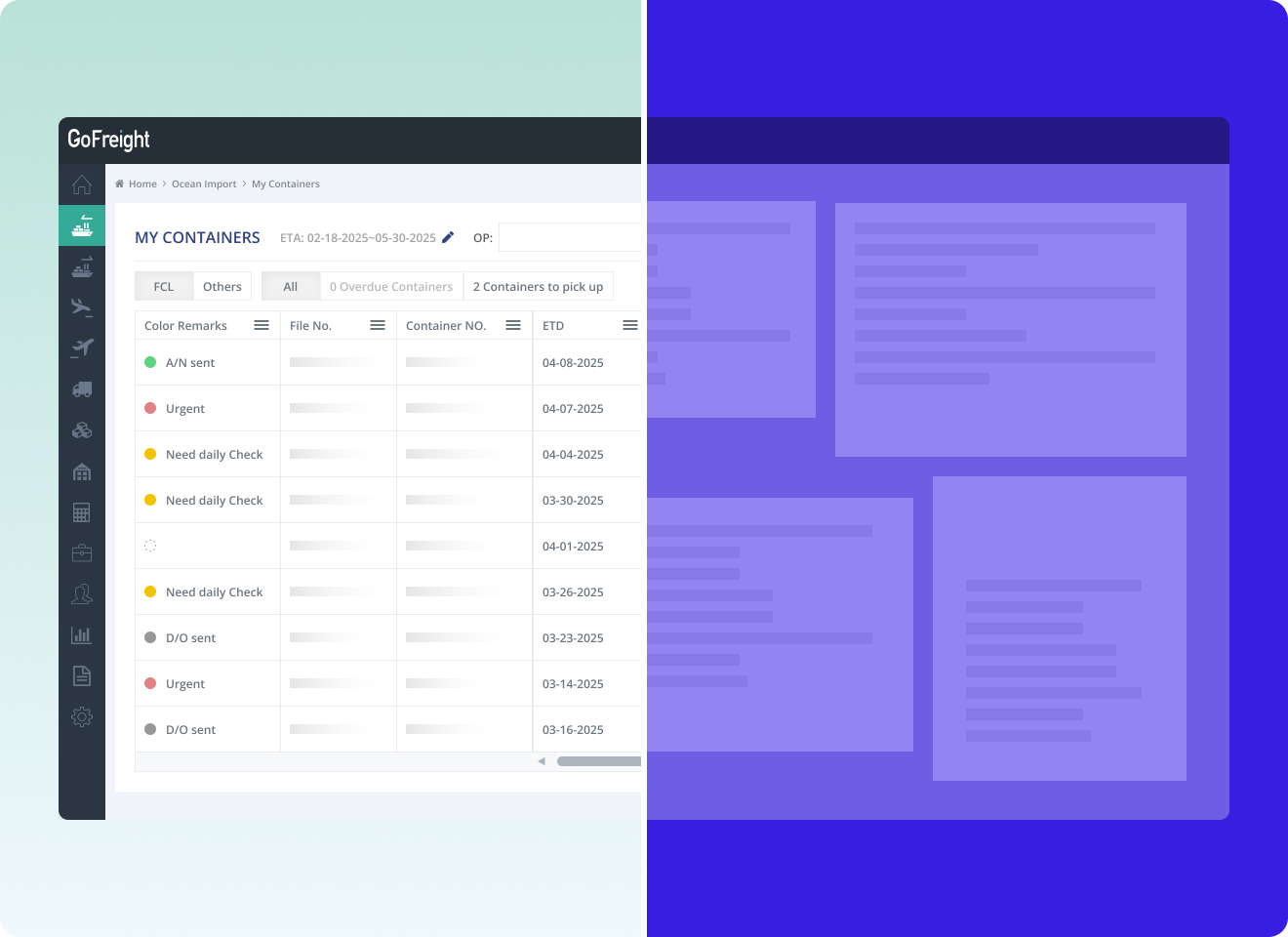
GoFreight vs Magaya: Modern Platform vs Established Mid-Market

Introduction
GoFreight and Magaya are both freight forwarding platforms, but they represent different generations of software design. The short version:
- GoFreight is a modern cloud native platform built in 2014 with current UX principles, seamless quote-to-invoice workflow, and native QuickBooks integration.
- Magaya is an established mid-market platform with strong warehouse management (Magaya WMS) and long track record, but with UX and workflow friction that 71 percent of reviewed users cite as a concern.
This comparison is written by the GoFreight team. We are not a neutral third party, but we have tried to present each platform's genuine strengths and limitations accurately.
Quick Comparison
| Factor | GoFreight | Magaya |
|---|---|---|
| Best For | Freight forwarders, regional through global enterprise | Forwarders with integrated warehouse operations |
| Founded | 2014 | 2001 |
| Architecture | Cloud native, AI powered | Cloud and hybrid |
| Implementation | 4 to 8 weeks | 8 to 12 weeks |
| G2 Rating | 4.8 / 5 (88 reviews) | 4.1 / 5 |
| WMS | Core warehouse features included | Strong (Magaya WMS) |
| Accounting | Native QuickBooks integration | Integrated but less native |
| Modern UX | Yes, designed 2014, regularly updated | 71 percent of users cite outdated UI |
Who This Comparison Is For
- Magaya users considering alternatives
- Forwarders evaluating both platforms for new deployment
- Companies weighing modern UX against integrated warehouse
Understanding the Pain Points
Outdated User Experience (71 percent of Companies)
"Magaya feels outdated, not user friendly, and has been in use for years," says an Operations Manager, former Magaya user.
The interface shows its age. Users report the learning curve is steeper than modern platforms, and day-to-day navigation takes more clicks than it should.
Manual Quote-to-Shipment Re-Entry (43 percent of Companies)
Users must re-enter customer, cargo, and charge data between quoting and shipment creation. The workflow is not seamless despite being in the same platform.
Concerns About Platform Direction
"I worked at Magaya for 5 years and liked the team, but the path they're going down to be more like CargoWise is concerning," says a former Magaya employee.
Some long-time users express concern about increasing complexity as Magaya adds features.
Accounting Integration Challenges
Users report QuickBooks sync issues and gaps in P&L by shipment reporting.
Platform Philosophy: Different Approaches
Magaya's Approach
Magaya combines freight forwarding with warehouse management in one platform. Magaya WMS is part of the platform. Strong for forwarders operating their own warehouses.
GoFreight's Approach
GoFreight focuses specifically on freight forwarding workflow: quoting, booking, shipment management, documentation, tracking, accounting, and customer portal. Core warehouse features included, but not a WMS replacement. Built cloud native with modern UX principles.
The Implication
If warehouse is primary, Magaya wins. If freight forwarding workflow and modern UX are primary, GoFreight wins.
The Honest Comparison
Where GoFreight Wins
| Capability | GoFreight | Magaya |
|---|---|---|
| User interface | Modern, regularly updated | 71 percent cite outdated UI |
| Quote-to-shipment flow | No re-entry required | 43 percent cite manual re-entry |
| QuickBooks integration | Native | Integrated but less native |
| Implementation speed | 4 to 8 weeks | 8 to 12 weeks |
| Platform focus | Freight forwarder specific | Drifting toward CargoWise complexity |
| User rating | 4.8 / 5 | 4.1 / 5 |
| Multi-country back office | Native | Possible but more setup work |
| AI features | Action Center, GoNexus Email Intake, GoNexus Hub, AI rate management | Limited |
Where Magaya Wins
- Warehouse management depth (Magaya WMS)
- Long track record in mid-market freight forwarding
- Established user base for reference checks
Customer Results After Switching to GoFreight
- TG Cargo: 200 percent efficiency improvement
- Whale US: 50 percent time savings
- Headwin: 2x shipment capacity
- UCM: 53 percent reduction in demurrage costs
"Switching to GoFreight was a game-changer. I save at least 50 percent of my time," says Jason Hsu, Owner, Whale US.
The Warehouse Question
When Warehouse Matters Most
Magaya is the right choice when:
- You operate your own warehouse facility
- WMS features (inventory, pick and pack, kitting) are a primary requirement
- Your business model depends on integrated forwarding plus warehousing
Magaya's WMS Strength
Magaya WMS gives Magaya genuinely strong warehouse functionality. For forwarders whose warehouse is the core of their operation, this matters a lot.
GoFreight's Approach
GoFreight includes core warehouse features but is not a full WMS. If your warehouse is primary, GoFreight is not the right fit. If your warehouse is secondary to forwarding, GoFreight's modern UX and workflow advantages usually outweigh the reduced WMS depth.
The Decision Point
Ask yourself: is my warehouse a primary business driver or a supporting function? If primary, Magaya. If supporting, GoFreight.
Implementation and Adoption
Implementation Timeline
GoFreight: 4 to 8 weeks with implementation bundled into subscription.
Magaya: 8 to 12 weeks, often with separate implementation fees.
The Adoption Factor
Modern UX matters because your team has to use the software every day. Platforms with outdated interfaces see lower adoption, more workarounds, and incomplete data.
"GoFreight is very user friendly, and I am quick in the system," says Janko Wille, CEO, Allround Forwarding Midwest.
The Real Question
Will your team actually use the software as designed? If UX creates friction, workflows get bypassed and data quality suffers.
The "Becoming Like CargoWise" Concern
Several Magaya reviews mention concern about the platform direction. As Magaya adds features, complexity grows. Some long-time users worry the platform is drifting toward CargoWise-like depth (and complexity) at the cost of what originally made Magaya appealing: mid-market fit.
This is worth evaluating if you are considering a 3 to 5 year commitment. Platform direction matters over time.
Pricing Comparison
Pricing Models
GoFreight: Per-user subscription with features included. Implementation bundled in subscription.
Magaya: Module-based pricing. Core plus add-ons for WMS, accounting, and advanced features. Implementation typically separate.
Total Cost Considerations
GoFreight all-inclusive pricing makes 3-year TCO predictable. Magaya's module approach can grow into a larger bill as you add features.
Who Should Choose What
Choose Magaya If
- Warehouse management is a primary business requirement
- You operate your own facility with active pick, pack, kitting workflows
- You need WMS depth that few other platforms match
- You are willing to accept UX and workflow friction for WMS strength
Choose GoFreight If
- Your primary business is freight forwarding, not warehousing
- Modern UX and team adoption matter
- You want quote-to-invoice workflow without re-entry
- Native QuickBooks integration is important
- You want faster implementation (weeks vs months)
- You are planning multi-country operations or back office in other countries
The Decision Framework
- Is warehouse primary or supporting? (Primary = Magaya, Supporting = GoFreight)
- How important is modern UX for your team? (High = GoFreight, Flexible = Magaya)
- What accounting system do you use? (QuickBooks native = GoFreight advantage)
- What is your implementation timeline? (Fast = GoFreight, Flexible = Magaya)
- Are you planning multi-country expansion? (Yes = GoFreight cloud native advantage)
Frequently Asked Questions
What are the main differences between GoFreight and Magaya?
The main differences are architecture (GoFreight cloud native vs Magaya hybrid), UX (GoFreight modern vs 71 percent of Magaya users citing outdated UI), implementation speed (4 to 8 weeks vs 8 to 12 weeks), WMS depth (Magaya stronger), and platform focus (GoFreight forwarder-specific vs Magaya adding complexity over time). G2 ratings are 4.8 vs 4.1.
Is GoFreight cheaper than Magaya?
Typically yes, because GoFreight uses per-user subscription with all features included and implementation bundled in. Magaya uses module-based pricing where WMS, accounting, and advanced features add to the base cost. Total cost of ownership depends on which modules you need, but GoFreight's all-inclusive approach is usually cheaper for forwarders not primarily focused on warehouse.
Is Magaya still a good platform for freight forwarders?
Yes, especially for forwarders with active warehouse operations. Magaya WMS is genuinely strong and few alternatives match it. The platform's UX and workflow issues are real concerns for forwarders without heavy warehouse needs, but for warehouse-first forwarders, Magaya remains a legitimate choice.
How long does it take to migrate from Magaya to GoFreight?
Typical migration takes 4 to 8 weeks with a parallel run period of 30 to 90 days. Key success factors include clean data, an engaged internal champion, staff training availability, and realistic timeline expectations.
Does GoFreight replace warehouse management?
Not fully. GoFreight includes core warehouse features but is not a complete WMS replacement. If warehouse management is a primary requirement, you will either keep Magaya or evaluate a dedicated WMS alongside GoFreight. For forwarders whose warehouse is a supporting function, GoFreight's core WMS features are typically sufficient.
Can enterprise freight forwarders use GoFreight instead of Magaya?
Yes. GoFreight's cloud native architecture scales from regional offices through global enterprise networks. More than 1,000 forwarders are live on the platform with coverage across 97 percent of US ports. Enterprise forwarders typically choose GoFreight for multi-country back office coordination, modern UX, and predictable pricing.
Conclusion
GoFreight and Magaya solve different problems. Magaya is strong when warehouse management is primary. GoFreight is strong when freight forwarding workflow, modern UX, and rapid implementation are primary.
If you are a Magaya user frustrated by outdated UX, manual workflows, or platform direction concerns, GoFreight directly addresses those issues. If you operate a heavy warehouse and WMS is central to your business, Magaya remains a legitimate choice.
"GoFreight is very user friendly, and I am quick in the system," says Janko Wille, CEO, Allround Forwarding Midwest.
Ready to see the difference? Request a GoFreight Demo.
Related Content
- Magaya Alternatives: Top Freight Software Competitors 2026
- GoFreight vs Descartes: Unified Platform vs Logistics Network
- CargoWise vs GoFreight: Honest Comparison
- Best Freight Management Software 2026
- Best TMS Software 2026
Sources: G2 and Capterra ratings (March 2026), vendor published product pages and case studies, prospect evaluation notes, and aggregated user review quotes.