
End-to-End Shipment Management: How Top Freight Forwarders Stay Efficient

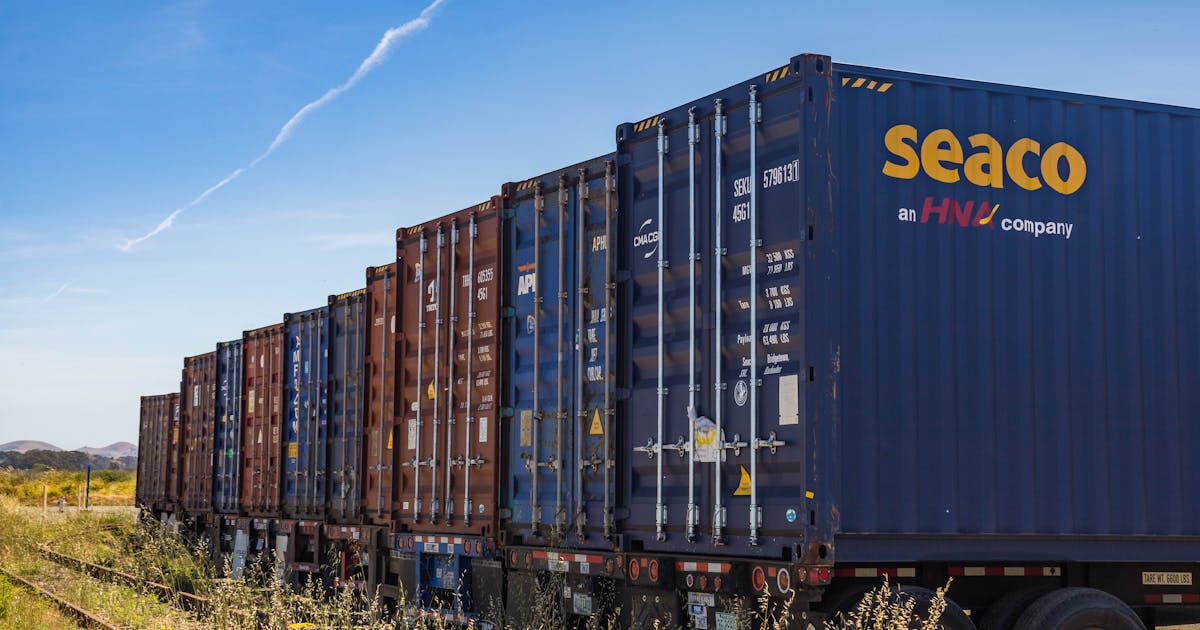
Shipment management is the process of coordinating, tracking, and optimizing cargo movement from origin to destination. For freight forwarders, effective shipment management encompasses booking coordination, documentation, carrier communication, milestone tracking, and exception handling. Top-performing forwarders differentiate themselves by managing these stages proactively rather than reactively—using centralized systems that provide real-time visibility across all shipments.
What Is Shipment Management in Freight Forwarding?
Shipment management is the operational backbone of every freight forwarding business. It covers every action taken from the moment a customer requests a quote to the final delivery confirmation—and everything that happens after.
For freight forwarders specifically, shipment management goes beyond simple cargo tracking. It includes coordinating between shippers, consignees, carriers, customs brokers, and warehouses. It means generating accurate documentation under tight deadlines, managing exceptions before they escalate, and keeping customers informed without burying your team in status update emails.
The distinction between average and high-performing forwarders almost always comes down to how they manage shipments. Average forwarders react to problems. High-performing forwarders build workflows that surface problems early, automate repetitive communication, and centralize information so nothing falls through the cracks.
This matters because the operational complexity of freight forwarding is increasing, not decreasing. Compliance requirements are tightening, customer expectations for visibility are rising, and carrier networks are more fragmented. Forwarders who treat shipment management as a series of disconnected tasks—rather than an integrated end-to-end process—will struggle to scale.
The End-to-End Shipment Management Process
Every shipment follows six core stages. The best forwarders treat these as a connected workflow, not isolated steps.
Stage 1: Quote and Booking
Shipment management starts before cargo moves. A customer requests a rate. The forwarder pulls carrier rates, calculates margins, builds a quote, and sends it. If accepted, the quote converts to a booking.
This stage sets the tone for everything downstream. When quote data flows directly into the booking—shipper details, cargo specs, service requirements—there’s no re-entry and no room for transcription errors. When it doesn’t, every subsequent stage inherits the risk of bad data.
The fastest forwarders convert quotes to bookings in minutes, not hours. They maintain rate databases that reflect current carrier pricing and build quotes without toggling between spreadsheets, emails, and carrier portals.
Stage 2: Documentation and Compliance
Documentation is where shipments stall or succeed. Bills of lading, commercial invoices, packing lists, certificates of origin, ISF filings, AMS submissions—each document has specific requirements, deadlines, and consequences for errors.
For ocean imports into the US, ISF must be filed 24 hours before vessel departure from the foreign port. Late filings mean penalties. Incorrect HTS codes trigger examination holds. A missing commercial invoice delays customs clearance by days.
Effective shipment management means treating documentation as a pre-arrival workflow, not a post-arrival scramble. The goal is to have all documents verified and submitted while cargo is still in transit, so clearance happens on schedule.
Stage 3: Carrier Coordination
Freight forwarders operate between their customers and their carriers. Coordinating between the two—confirming bookings, managing space allocation, handling amendments, communicating schedule changes—is a constant operational task.
A single ocean shipment might involve a trucking company for pre-carriage, a steamship line for the ocean leg, and another trucker for final delivery. An air shipment adds airlines, ground handlers, and potentially multiple connecting flights. Each party has its own system, its own communication format, and its own timeline.
The forwarders who manage this well have a single source of truth for each shipment. They don’t chase updates across carrier websites and email threads. They consolidate carrier communication into one workflow.
Stage 4: Tracking and Milestone Updates
Once cargo is in motion, tracking becomes the primary operational activity. Customers want to know where their shipment is. Operations teams need to know which shipments require attention. Management needs to know if the business is meeting its service commitments.
Milestone tracking means monitoring specific events: cargo picked up, vessel departed, arrived at transshipment port, customs cleared, out for delivery. Each milestone is a checkpoint that either confirms the shipment is on track or signals a problem.
Manual tracking—logging into individual carrier portals, copying status updates into spreadsheets, emailing customers one at a time—consumes hours of staff time daily. It’s also error-prone. A missed update today becomes a customer complaint tomorrow.
“With GoFreight, I can easily supervise performance from multiple operation teams, making management easier and straightforward to have everything centralized in one customizable dashboard.” — Jeff Lee, Sales Manager, UCM
Stage 5: Exception Management
No shipment plan survives contact with reality unscathed. Vessels roll cargo. Flights cancel. Customs puts containers on hold. Trucks miss appointments. Exception management is the process of identifying these disruptions, assessing their impact, and taking corrective action.
The difference between a well-managed exception and a poorly managed one is timing. A forwarder who learns about a vessel delay 48 hours before arrival can rebook trucking, notify the customer, and adjust the delivery schedule. A forwarder who learns about it when the customer calls asking where their cargo is has already lost control of the situation.
Exception management at scale requires automated alerts. No human can manually monitor hundreds of shipments and catch every deviation. The forwarders who handle exceptions well have systems that flag anomalies—a container that hasn’t moved in 48 hours, a shipment approaching its free time limit, a document that hasn’t been submitted by deadline.
Stage 6: Delivery and Post-Delivery
The shipment isn’t done when cargo arrives. Proof of delivery must be captured. Final invoicing needs to reflect actual charges, including any accessorials, storage fees, or adjustments that occurred during transit. Customer communication should confirm delivery and close the loop.
Post-delivery activities also include carrier invoice reconciliation—verifying that what the carrier charges matches what was quoted and what actually happened. Discrepancies are common, and catching them requires comparing booking data against carrier invoices against actual shipment events.
For forwarders who handle this stage well, post-delivery feeds forward into future operations. Carrier performance data informs future routing decisions. Cost data refines quoting accuracy. Customer feedback shapes service improvements.
Common Shipment Management Challenges
Most shipment management problems stem from the same root causes. Understanding them is the first step to solving them.
Manual Tracking Across Multiple Carriers
Freight forwarders work with dozens of carriers. Each carrier has its own portal, its own data format, and its own update frequency. Checking status across all active shipments means logging into multiple systems, copying data, and consolidating it manually. This process is slow, error-prone, and doesn’t scale.
Communication Gaps with Clients
Customers expect proactive updates. Most forwarders deliver reactive ones—responding to inquiries rather than anticipating them. The result: operations staff spend hours answering “where’s my shipment?” instead of managing exceptions and growing business.
Documentation Errors
Manual data entry across disconnected systems creates errors. A shipper name misspelled on the bill of lading. A weight transposed on the commercial invoice. An HTS code copied incorrectly. Each error triggers downstream delays, and each delay erodes customer confidence.
Lack of Real-Time Visibility
Without a centralized view of all shipments, managers can’t prioritize effectively. Which shipments need attention right now? Which are approaching free time limits? Which customers haven’t received an update in three days? Without visibility, these questions go unanswered until they become problems.
What Top Freight Forwarders Do Differently
The forwarders who consistently outperform their competitors share a set of operational practices. None of these are secrets—they’re disciplines.
Centralized Visibility
Top forwarders maintain a single view of all active shipments across all modes, all carriers, and all stages. This means one dashboard, not twelve carrier portals. One place to check status, not a combination of spreadsheets and email threads.
Centralization isn’t just about convenience. It’s about decision-making speed. When an exception occurs, the forwarder who can see all affected shipments in one view responds faster than the one who has to piece together information from multiple sources.
Proactive Exception Handling
Rather than waiting for customers to report problems, top forwarders identify exceptions before they impact delivery. Automated alerts surface issues—delayed vessels, customs holds, free time approaching—so teams can act before costs accumulate.
“GoFreight transformed how we viewed and utilized data.” — Joseph Park, Founder, Seamax Freight International
Automated Client Updates
High-performing forwarders don’t rely on staff to manually send status emails. They automate milestone notifications so customers receive updates at key points—booking confirmed, vessel departed, customs cleared, out for delivery—without anyone on the team pressing send.
This does two things: it reduces internal workload and it raises the customer experience. Customers feel informed. Staff focus on exceptions rather than routine updates.
Data-Driven Decision Making
Top forwarders use shipment data to improve operations over time. Which carriers consistently deliver on time? Which trade lanes have the highest exception rates? Which customers generate the most support inquiries? The answers drive better routing, better pricing, and better service.
How Technology Enables Better Shipment Management
The operational practices described above are possible without technology—in theory. In practice, they require software purpose-built for freight forwarding workflows.
Dashboard Consolidation
Modern shipment management software aggregates carrier data, milestone events, and exception alerts into a single interface. Instead of toggling between carrier websites and spreadsheets, operations teams work from one screen that shows every active shipment, its current status, and any items requiring attention.
Automated Alerts
Configurable alerts notify teams when shipments deviate from expected timelines. A container that hasn’t moved in 48 hours. A document submission deadline approaching. Free time expiring in two days. These alerts transform exception management from reactive to proactive.
Client Portals
Customer-facing portals give shippers direct access to shipment status, documents, and milestone history. This reduces inbound inquiries and positions the forwarder as a transparency leader—a differentiator in an industry where visibility has historically been poor.
“We used to handle 100 shipments a month, and suddenly, we were managing 200.” — Joan Chou, VP, Headwin Global Logistics
Where GoFreight Fits
For forwarders evaluating shipment management software, GoFreight offers a cloud-native platform built specifically for freight forwarding workflows. It consolidates quoting, booking, tracking, documentation, and accounting into one system—replacing the patchwork of spreadsheets, carrier portals, and disconnected tools that most forwarders rely on.
GoFreight’s dashboard provides centralized visibility across all shipment modes, automated milestone alerts, and a customer portal that reduces status inquiries. Implementation typically takes 4-8 weeks, and the platform scales from growing operations to large enterprises.
See how GoFreight works for your operation →
FAQ
What is the end-to-end shipment process?
The end-to-end shipment process covers all stages of cargo movement from origin to destination. For freight forwarders, this includes six stages: quote and booking, documentation and compliance, carrier coordination, tracking and milestone updates, exception management, and delivery with post-delivery reconciliation. Each stage builds on the previous one, and effective management requires treating them as a connected workflow rather than isolated tasks.
What is freight forwarding management?
Freight forwarding management is the coordination of cargo movement on behalf of shippers. It involves selecting carriers, booking space, preparing documentation, managing customs compliance, tracking shipments, handling exceptions, and ensuring timely delivery. Freight forwarders act as intermediaries between shippers and carriers, managing the operational complexity that shippers prefer not to handle in-house.
What is the difference between TMS and FMS?
A TMS (Transportation Management System) is a broad category of software for managing freight movement. An FMS (Freight Management System) is a subset designed specifically for freight forwarders and NVOCCs. The key difference is workflow specificity: a TMS may serve shippers, carriers, and brokers, while an FMS is built around forwarding workflows like house/master bill management, multi-leg shipment coordination, and carrier rate management. In practice, the terms are often used interchangeably in the freight forwarding context.
What are the 4 types of logistics management?
The four types of logistics management are: (1) supply management and logistics, which covers sourcing and procurement; (2) distribution and material movement, which handles transportation and delivery; (3) production logistics and management, which coordinates manufacturing workflows; and (4) reverse logistics, which manages returns, recycling, and disposal. Freight forwarders operate primarily within distribution and material movement, though their services touch supply management and reverse logistics depending on client needs.
How do freight forwarders track shipments?
Freight forwarders track shipments through a combination of carrier data feeds, milestone monitoring, and operational software. Basic tracking involves manually checking carrier portals for status updates. Advanced tracking uses shipment management software that aggregates data from multiple carriers into a single dashboard, provides automated alerts for exceptions, and offers customer-facing portals for self-service visibility. The most effective forwarders use systems that monitor shipments continuously and flag deviations from expected timelines automatically.
What is shipment management software?
Shipment management software is a platform that centralizes the coordination, tracking, and documentation of cargo movements. For freight forwarders, it typically includes quote management, booking creation, document generation, carrier communication, milestone tracking, exception alerts, and customer portals. The software replaces manual processes—spreadsheets, email chains, and carrier portal logins—with automated workflows that reduce errors and improve operational efficiency.