Top Logistics Technology Trends Reshaping Freight in 2026

A freight forwarder in Singapore recently automated their customs document processing using AI. What used to take a team of three operators four hours per day now runs in 12 minutes with a 99.2% accuracy rate. The result: $180,000 in annual labor savings and faster clearance times that won them two new enterprise accounts.
This is not a future scenario. It is happening right now. In 2026, logistics technology has moved from optional enhancement to competitive necessity. Freight forwarders who adopt the right technologies are winning accounts, reducing costs, and scaling operations. Those who do not are losing ground to digital native competitors and tech forward traditional forwarders alike.
This guide covers the 10 most impactful logistics technology trends reshaping freight operations in 2026, with practical insights on what each means for freight forwarders.
1. AI and Machine Learning in Freight Operations
Artificial intelligence is no longer experimental in logistics. In 2026, AI has transitioned from a buzzword to an expected component of planning, transportation, warehousing, and supplier management workflows.
Where freight forwarders are using AI today:
- Demand forecasting. AI analyzes historical shipment data, seasonal patterns, and economic indicators to predict volume fluctuations weeks in advance.
- Route optimization. Machine learning algorithms evaluate thousands of routing options across carriers, modes, and transit times to find the best combination of cost and speed.
- Document processing. AI powered OCR and natural language processing extract data from bills of lading, commercial invoices, packing lists, and customs declarations, reducing manual entry by 80% to 90%.
- Risk prediction. Models identify shipments at high risk of delay based on carrier performance, weather patterns, port congestion, and geopolitical factors.
- Rate prediction. Algorithms analyze rate trends and market conditions to help forwarders time their carrier negotiations and spot market purchases.
Practical takeaway: Start with document processing automation. It delivers the fastest ROI and directly reduces the operational bottleneck that slows down most forwarding operations.
2. Digital Freight Platforms and Marketplaces
Digital freight platforms have become a standard component of logistics operations. These platforms enable shippers to compare rates, book shipments, and track cargo through a single interface, bypassing traditional phone and email workflows.
For freight forwarders, digital platforms present both an opportunity and a threat. Platforms like Flexport, Freightos, and Xeneta are capturing market share by offering transparency and speed. Traditional forwarders who adopt similar digital capabilities through their own transportation management systems can match this experience while maintaining their relationship advantage and specialized expertise.
Practical takeaway: If your customers still need to email you for a rate quote, you are already behind. Invest in digital quoting and booking capabilities.
3. Electronic Bills of Lading (eBL) and Digital Documentation
The shift from paper to electronic bills of lading is accelerating. In 2026, major carriers and ports are increasingly supporting eBL platforms, and the legal framework for electronic trade documents has expanded with legislation like the UK's Electronic Trade Documents Act.
Why this matters for freight forwarders:
- Paper bills of lading cost $100 to $200 per transaction when you factor in printing, courier fees, and processing time.
- Paper documents add 5 to 10 days to the document turnaround process.
- Digital documents reduce errors from manual re keying by eliminating physical handoffs.
The industry target is 100% eBL adoption by 2030. Forwarders who make the transition now gain a competitive advantage in processing speed and cost efficiency.
Practical takeaway: Check whether your TMS and your primary carriers support eBL. If they do, start transitioning your highest volume trade lanes first.
4. Warehouse Automation and Robotics
Warehouse automation is no longer limited to Amazon scale operations. In 2026, more logistics companies are investing in robotics to address labor shortages, reduce errors, and improve fulfillment speed. The warehouse management system market is growing at 16.3% CAGR, driven largely by automation integration.
Key technologies freight forwarders should know:
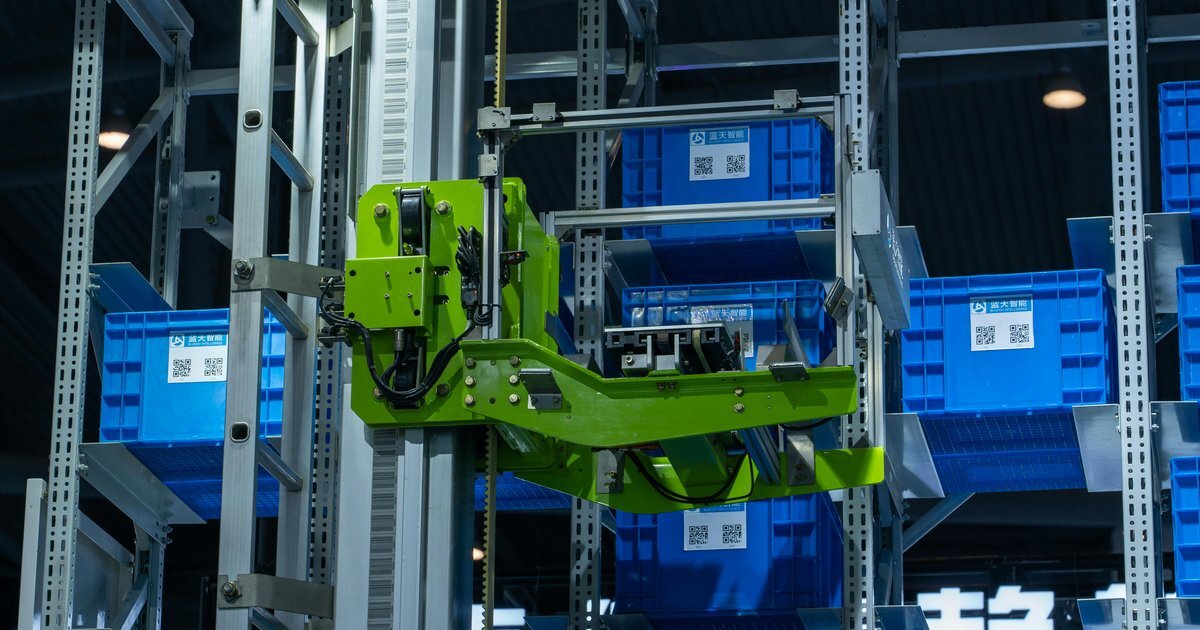
- Autonomous Mobile Robots (AMRs). These machines navigate warehouses without fixed infrastructure, adapting to new layouts and tasks. They integrate into existing operations without structural modifications.
- Automated picking systems. Goods to person systems bring inventory to workers rather than sending workers to search shelves, improving picking accuracy to 99.9%.
- Automated sorting. High speed sorting systems process thousands of packages per hour, essential for forwarders handling ecommerce fulfillment.
Practical takeaway: If you operate warehouse space alongside your forwarding business, evaluate AMR solutions first. They require the least infrastructure change and can be deployed in weeks rather than months.
5. Real Time Visibility and IoT Tracking
Internet of Things (IoT) sensors and real time visibility platforms have transformed shipment tracking from periodic status updates to continuous monitoring. GPS trackers, temperature sensors, humidity monitors, and shock detectors provide granular data throughout the supply chain.
For freight forwarders, real time visibility serves two purposes. Internally, it enables proactive exception management. You can reroute shipments, notify customers, and arrange alternative transport before a delay escalates. Externally, it delivers the transparency that modern shippers demand. Customers expect to track their cargo with the same ease as tracking an online shopping delivery.
Practical takeaway: Integrate real time visibility into your customer facing portal. The ability to provide live tracking is increasingly a prerequisite for winning enterprise accounts.
6. Blockchain for Supply Chain Transparency
Blockchain technology in logistics has moved past the initial hype cycle and is finding practical applications in documentation, provenance tracking, and trade finance. Blockchain based documentation reduces paperwork, improves data accuracy, and shortens processing times, particularly in cross border logistics.
The most successful implementations focus on specific pain points rather than attempting to blockchain everything. Trade finance platforms use blockchain to accelerate letter of credit processing. Food supply chains use it for origin to shelf traceability. Customs authorities are piloting blockchain for trusted trader programs.
Practical takeaway: Do not invest in blockchain for its own sake. Look for specific pain points in your documentation or compliance workflows where immutable, shared records would solve a real problem.
7. Autonomous Vehicles and Trucks
Autonomous trucking is progressing from pilot programs to commercial deployment on specific routes. Level 4 autonomous trucks are being used on dedicated freight corridors in the United States, reducing delivery times by 30% to 40% by operating continuously without mandatory rest breaks.
For freight forwarders, autonomous trucks will initially affect the middle mile: long haul highway segments between distribution centers. The first and last mile will remain human operated for the foreseeable future due to the complexity of urban navigation and loading dock operations.
Practical takeaway: Monitor autonomous trucking developments on your primary domestic lanes. As commercial deployments expand, they will create new capacity and potentially lower linehaul rates on high volume corridors.
8. Sustainable Logistics and Green Freight
Environmental sustainability has shifted from a corporate social responsibility initiative to a business requirement. In 2026, ESG (Environmental, Social, and Governance) compliance is increasingly mandated by regulators and demanded by enterprise shippers who must report scope 3 emissions across their supply chains.
What this means for freight forwarders:
- Carbon calculation and reporting capabilities are becoming a standard feature in logistics software.
- Shippers are asking forwarders to provide carbon emission data for each shipment.
- Alternative fuels (LNG, methanol, biofuels) are creating new pricing dynamics in ocean freight.
- Green corridors between major ports are driving carrier investments in zero emission vessels.
Practical takeaway: Ensure your freight management software can calculate and report carbon emissions per shipment. This capability is increasingly a requirement in enterprise shipper RFPs.
9. Cloud Based TMS and SaaS Logistics Platforms
Cloud adoption is now the default for freight forwarders of all sizes, from small operators to large enterprises. In 2026, even traditionally conservative enterprise forwarders have completed the migration, driven by lower total cost of ownership, automatic updates, and the ability to scale without hardware investments.
Cloud based TMS platforms provide freight forwarders with:
- Access from anywhere. Manage operations from the office, home, or a client site.
- Automatic updates. New features and compliance updates deploy without IT intervention.
- Scalability. Add users, offices, or warehouse locations without infrastructure changes.
- Integration. Cloud APIs connect with carrier portals, customs systems, and accounting platforms.
Practical takeaway: If you are still running on premise software, the migration cost is likely lower than your ongoing maintenance and hardware refresh expenses. Cloud migration also eliminates the risk of running on unsupported software versions.
10. Cybersecurity in Logistics
The logistics industry has become a prime target for cyberattacks. Ransomware attacks have hit major carriers, port operators, and freight forwarders, causing days of operational downtime and millions in losses. As logistics operations become more digital and interconnected, the attack surface expands.
Critical cybersecurity priorities for freight forwarders:
- Email security. Phishing attacks targeting freight payment fraud (changing bank details on invoices) are the most common threat to forwarders.
- Multi factor authentication. Protecting access to your TMS, email, and banking systems.
- Backup and recovery. Maintaining offline backups that cannot be encrypted by ransomware.
- Vendor security. Evaluating the security practices of your software providers, carriers, and partners.
Practical takeaway: Implement multi factor authentication on all business critical systems immediately if you have not already. It is the single most effective step to prevent unauthorized access.
Technology Adoption Roadmap for Freight Forwarders
| Priority | Technology | Investment | Timeline | Impact |
|---|---|---|---|---|
| Immediate | Cloud TMS | $500 to $2,000/mo | 1 to 3 months | Operational foundation |
| Immediate | Multi factor authentication | Minimal | 1 week | Security critical |
| Short term | AI document processing | Part of TMS or add on | 1 to 2 months | 80%+ reduction in manual entry |
| Short term | Real time visibility | $200 to $1,000/mo | 1 to 2 months | Customer retention |
| Medium term | eBL adoption | Integration effort | 3 to 6 months | Cost savings, faster processing |
| Medium term | Carbon reporting | Part of TMS upgrade | 2 to 4 months | Enterprise client requirement |
| Long term | Warehouse robotics | $50K to $500K | 6 to 12 months | Labor cost reduction |
| Monitor | Autonomous trucks | N/A (carrier side) | 2 to 5 years | Potential rate reduction |
| Monitor | Blockchain documentation | Pilot participation | 1 to 3 years | Specific use cases only |
Ship Faster. Scale Smarter. Request a GoFreight Demo →
Frequently Asked Questions
What is the most important technology for freight forwarders in 2026?
A cloud based transportation management system is the most important technology foundation for freight forwarders in 2026. It serves as the central platform that connects all other technologies, from AI document processing to real time visibility and carrier integrations. Without a modern TMS, adopting individual technologies becomes fragmented and difficult to scale. For forwarders already running a cloud TMS, AI powered document processing offers the highest near term return on investment by dramatically reducing manual data entry.
How much should a freight forwarder invest in technology?
Industry benchmarks suggest freight forwarders should invest 3% to 5% of gross revenue in technology. For a freight forwarder with $10 million in revenue, this translates to $300,000 to $500,000 annually. For larger enterprise forwarders, absolute spend scales with revenue while the percentage range often holds. This includes TMS licensing, visibility platforms, hardware (scanners, mobile devices), and IT support. The key is measuring return on investment for each technology investment. A cloud TMS that saves 20 hours of manual work per week at $25/hour pays for itself in labor savings alone.
Will AI replace freight forwarders?
AI will not replace freight forwarders, but freight forwarders who use AI will replace those who do not. AI excels at repetitive, data intensive tasks like document processing, rate comparison, and pattern recognition. It does not replicate the relationship management, creative problem solving, and industry expertise that define successful freight forwarding. The forwarders who thrive will use AI to automate operational tasks, freeing their teams to focus on customer relationships, complex shipment management, and strategic growth.
How do small freight forwarders compete with digital freight platforms?
Small freight forwarders compete by combining digital capabilities with personalized service. Adopting a modern TMS with digital quoting, online booking, and real time tracking provides the convenience that shippers expect from digital platforms. Meanwhile, specialized trade lane expertise, proactive communication during disruptions, and flexible problem solving create value that platform models struggle to replicate. The key is matching digital convenience while exceeding platforms on service quality for your specific niche.
What cybersecurity threats should freight forwarders worry about most?
Business email compromise (BEC) and freight payment fraud are the most financially damaging threats to freight forwarders. Attackers compromise email accounts or spoof sender addresses to redirect freight payments to fraudulent bank accounts. Ransomware attacks that encrypt operational systems and demand payment are the most operationally disruptive. Both threats are preventable with basic security measures: multi factor authentication, email security tools, payment verification procedures, and regular data backups stored offline.