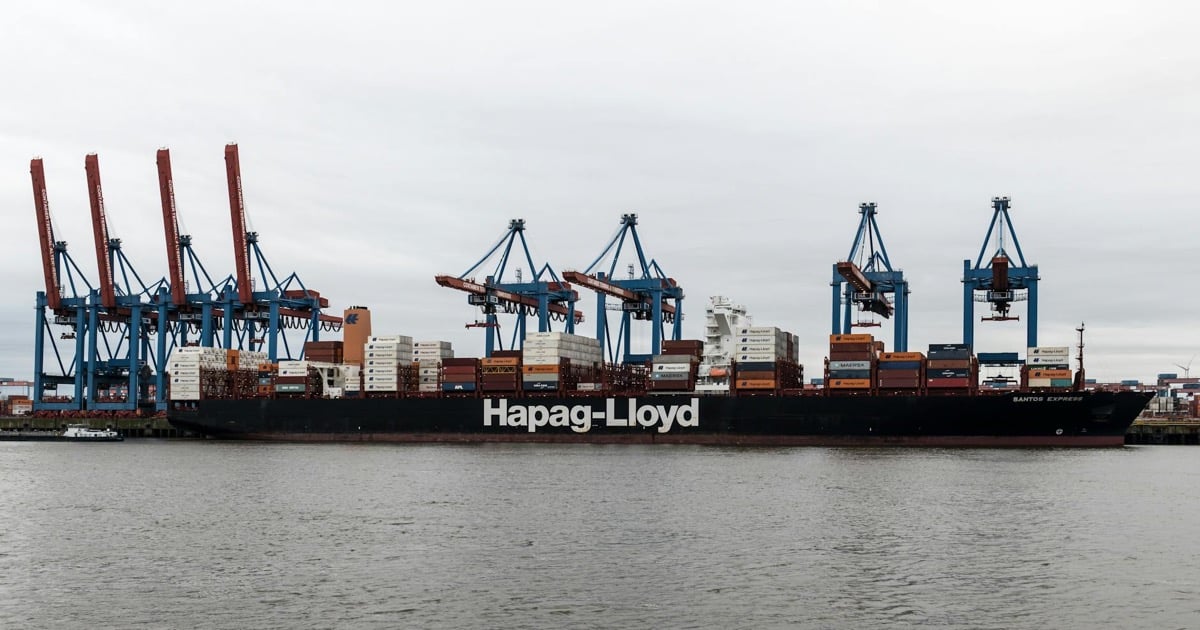

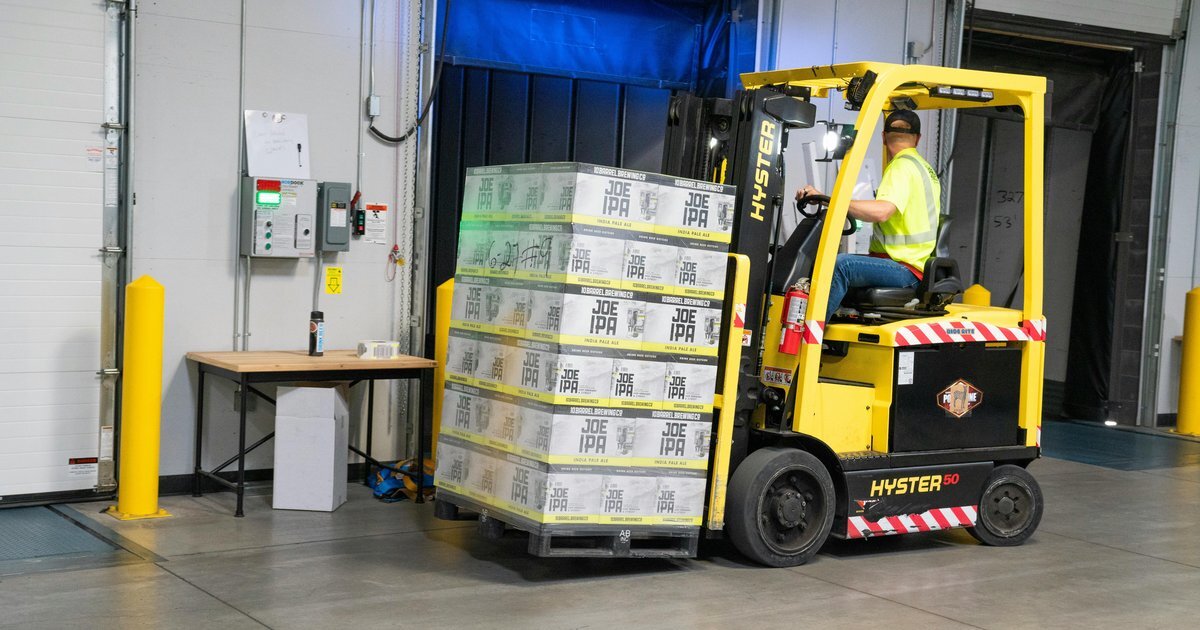
A freight forwarder in Los Angeles was managing 3,000 SKUs across two warehouses using spreadsheets and a shared drive. Every month, the team lost an average of 12 hours reconciling inventory discrepancies, and misrouted shipments cost them $8,000 in penalties and reshipping fees. Within 90 days of implementing a proper warehouse management system, those losses dropped to near zero.
For freight forwarders handling warehousing alongside forwarding, the right warehouse management system (WMS) is not a luxury. It is the difference between profitable warehouse operations and a cost center that drains your margins. The global WMS market is growing at 16.3% compound annual growth rate, driven by cloud adoption, automation, and the increasing complexity of omnichannel fulfillment.
This guide compares the 10 best warehouse management systems for freight operations in 2026, covering everything from enterprise platforms to solutions built specifically for freight forwarders.
Key Takeaways
- The right WMS for a freight forwarder is usually decided by native TMS integration, not raw feature count. Double entry between WMS and TMS is the biggest hidden cost.
- Manhattan Associates leads enterprise warehouse depth (Gartner Magic Quadrant Leader). CargoWise and Magaya bundle WMS and forwarding TMS in one suite.
- Implementation runs 4 to 8 weeks for mid-market cloud WMS and 6 to 12+ months for enterprise platforms like SAP, Oracle, and CargoWise.
- Cloud-based WMS is the 2026 default. The cloud WMS market is growing at 16.3% CAGR.
- Pricing: mid-market $500 to $2,000 per month; enterprise $10,000+ per month with six-figure implementation.
- Forwarders running both warehousing and forwarding usually run two systems (WMS for physical ops + forwarding TMS for shipment compliance), connected via API at the warehouse outbound event.
What Is a Warehouse Management System?
A warehouse management system (WMS) is software that controls and optimizes daily warehouse operations. It manages receiving, putaway, inventory tracking, picking, packing, and shipping. Modern WMS platforms also integrate with transportation management systems to create end to end visibility from warehouse shelf to final delivery.
WMS vs TMS: What is the difference?
| Feature | WMS | TMS |
|---|---|---|
| Primary focus | Warehouse operations and inventory | Transportation and shipment management |
| Key functions | Receiving, putaway, picking, packing | Rate shopping, carrier selection, tracking |
| Inventory management | Core capability | Limited or none |
| Freight documentation | Limited | Core capability (BOL, AWB, customs) |
| Best for | Companies with physical warehouse space | Companies coordinating shipments across carriers |
For freight forwarders, the ideal setup is either a platform that combines WMS and forwarding TMS in one suite, or two specialised systems that connect via API.
The 10 Best Warehouse Management Systems for Freight Operations
1. Manhattan Associates Active Warehouse Management
Best for: Enterprise warehouses needing the broadest functional depth
Tier: Enterprise
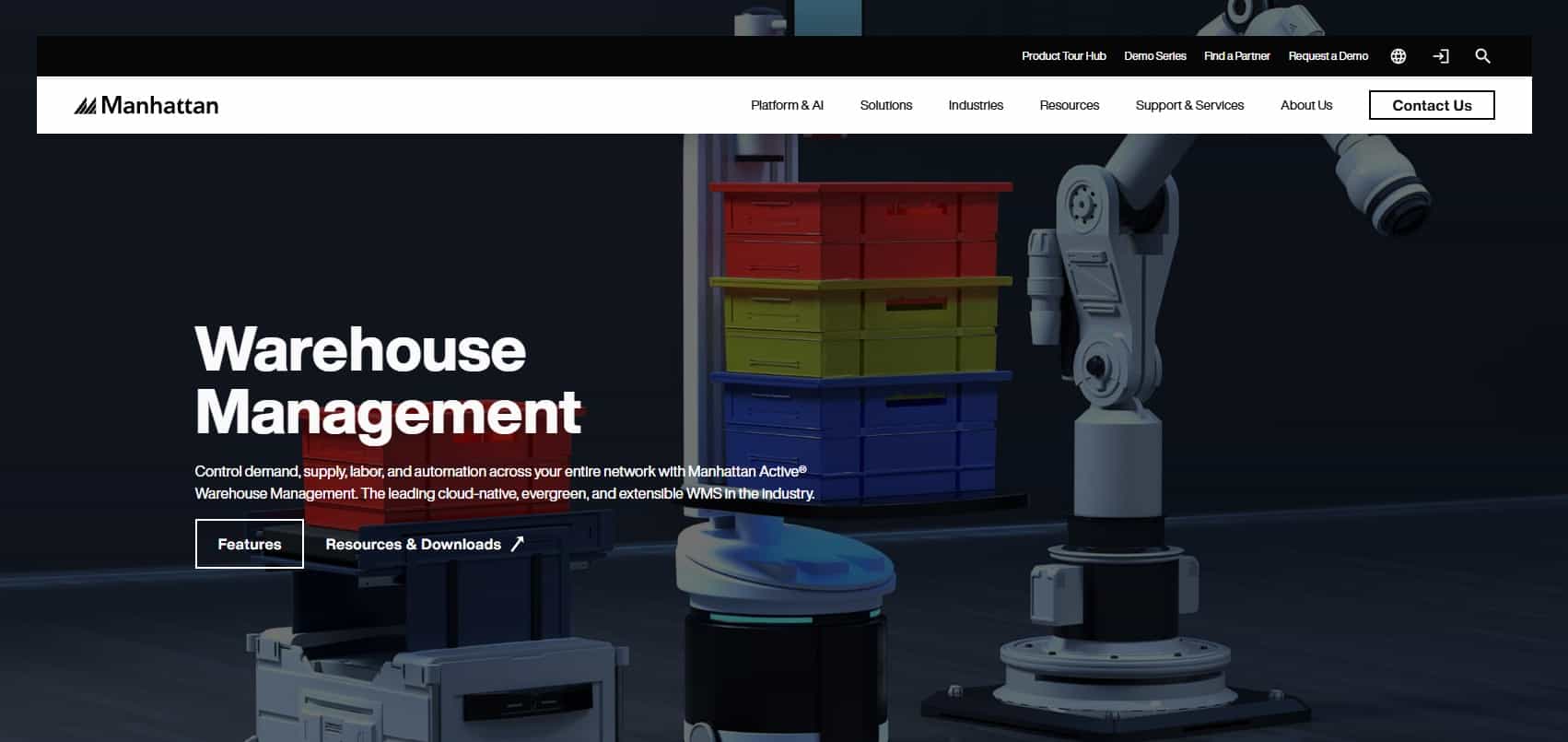
Manhattan Associates is the long-standing market leader in warehouse management software, named a Leader in the Gartner Magic Quadrant for Warehouse Management Systems for over a decade. Manhattan Active Warehouse Management is the company's cloud-native, microservices-based WMS, which replaces the legacy SCALE and PkMS products.
The system handles every standard warehouse function (receiving, putaway, inventory tracking, picking, packing, shipping) plus advanced capabilities including labor management, slotting optimization, warehouse robotics orchestration, and yard management. Manhattan also offers tight integration with its own TMS and Order Management products, creating an end-to-end supply chain suite.
Key strengths: Market leadership, microservices cloud architecture, deep functional breadth, AI-powered slotting and labor optimization, strong robotics and automation orchestration, complete supply chain suite available.
2. CargoWise
Best for: Large enterprises needing a global logistics platform
Tier: Enterprise
CargoWise by WiseTech Global is a long established enterprise platform in freight forwarding. Its warehouse module provides inventory management, receipt and dispatch processing, and integration with its forwarding, customs, and accounting modules.
The platform is designed for multi warehouse, multi country operations where a single global view of inventory is essential. CargoWise's complexity and cost make it better suited for large forwarders with dedicated IT teams. Implementation typically takes 6 to 12 months.
Key strengths: Global scalability, deep customs and compliance integration, single database architecture, widely adopted by large forwarders.
3. Oracle Fusion Cloud WMS
Best for: Enterprises with complex supply chains needing full suite integration
Tier: Enterprise
Oracle's cloud WMS is part of its broader Supply Chain Management suite. It provides advanced warehouse automation, labor management, wave planning, and task optimization. The system uses machine learning to optimize putaway strategies and picking paths based on historical data.
Oracle is strongest when paired with its broader ERP and supply chain modules. For freight forwarders, it is typically more than needed unless you operate large scale distribution centers alongside your forwarding business.
Key strengths: AI driven optimization, advanced labor management, enterprise grade scalability, comprehensive supply chain suite.
4. SAP Extended Warehouse Management
Best for: Organizations already invested in the SAP ecosystem
Tier: Enterprise
SAP EWM is a warehouse management solution that integrates deeply with SAP's ERP, transportation management, and supply chain planning tools. It handles complex warehouse processes including cross docking, value added services, yard management, and labor management.
The system is best suited for organizations that already run SAP across their operations. Implementing SAP EWM as a standalone solution without the broader SAP ecosystem is rarely cost effective.
Key strengths: Deep SAP ecosystem integration, advanced yard management, complex process support, real time analytics.
5. Infor CloudSuite WMS
Best for: Warehouses seeking advanced automation and 3D visualization
Tier: Enterprise / mid-market
Infor's WMS includes 3D visual warehouse technology, which provides a virtual model of your warehouse layout. This helps identify bottlenecks, optimize slotting, and improve picking accuracy. The system also integrates with warehouse robotics and automation equipment.
For freight operations, Infor works well when warehousing is a significant part of your business rather than an add on to forwarding services.
Key strengths: 3D warehouse visualization, automation integration, industry specific configurations, cloud native architecture.
6. Magaya Supply Chain
Best for: Freight brokerages that also manage physical inventory
Tier: Mid-market
Magaya blends TMS and WMS capabilities into a single platform designed for logistics companies. Its warehouse module handles receiving, inventory control, pick and pack, and shipping, while its forwarding module manages ocean, air, and ground shipments.
The platform is used by small to mid-size forwarders and NVOCCs who need warehouse capabilities without the complexity of enterprise solutions. Magaya also includes customs compliance and accounting modules.
Key strengths: Combined TMS and WMS, built for logistics companies, customs compliance, accessible pricing for mid-size operations.
7. 3PL Warehouse Manager by Extensiv
Best for: Third party logistics providers managing multiple client inventories
Tier: Mid-market
Extensiv's 3PL Warehouse Manager is built for third party logistics operations. It handles multiple client inventories within a single warehouse, with automated billing, client portals, and integration with major ecommerce platforms.
For freight forwarders who offer 3PL services alongside forwarding, this system provides the multi client visibility and billing automation that generic WMS platforms lack.
Key strengths: Multi client inventory management, automated 3PL billing, client portal, ecommerce integrations.
8. Deposco Bright Suite
Best for: Growing companies needing a scalable cloud native WMS
Tier: Mid-market
Deposco offers a cloud native WMS built for scalability. Its Bright Suite covers warehouse management, order management, and supply chain solutions with a focus on rapid deployment and flexibility. The system handles standard warehouse functions plus value added services like kitting and light assembly.
Key strengths: Cloud native architecture, rapid deployment (weeks not months), scalable, order management included.
9. Blue Yonder WMS

Best for: Organizations prioritizing AI driven warehouse optimization
Tier: Enterprise
Blue Yonder (formerly JDA Software) brings AI and machine learning capabilities to warehouse management. The system uses predictive analytics to optimize labor allocation, inventory positioning, and order fulfillment strategies. It continuously learns from operational data to improve efficiency over time.
Key strengths: AI and machine learning optimization, predictive analytics, labor management, continuous improvement through data learning.
10. Microsoft Dynamics 365 Supply Chain Management
Best for: Microsoft ecosystem companies needing integrated ERP and WMS
Tier: Enterprise / mid-market
Dynamics 365 integrates warehouse management with broader ERP functions including financials, procurement, and manufacturing. Its WMS module covers standard warehouse operations plus mobile warehouse management, wave processing, and containerization.
For freight forwarders using Microsoft 365, Teams, and Power BI, Dynamics 365 provides a natural extension with familiar interfaces and seamless data sharing.
Key strengths: Microsoft ecosystem integration, built in AI and analytics via Power BI, familiar interface, scales from mid-market to enterprise.
WMS Comparison Table
| WMS | Best For | Tier | TMS Integration | Cloud | Freight Focus |
|---|---|---|---|---|---|
| Manhattan Associates | Enterprise depth | Enterprise | Manhattan TMS | Yes | General |
| CargoWise | Large enterprises | Enterprise | Native (built in) | Yes | Purpose built |
| Oracle Fusion | Complex supply chains | Enterprise | Oracle TMS | Yes | General |
| SAP EWM | SAP ecosystem | Enterprise | SAP TM | Yes | General |
| Infor CloudSuite | Automation focused | Enterprise/Mid | Available | Yes | General |
| Magaya | Freight brokerages | Mid-market | Native (built in) | Yes | Purpose built |
| Extensiv 3PL | 3PL providers | Mid-market | Via integrations | Yes | 3PL focused |
| Deposco | Growing companies | Mid-market | Via integrations | Yes | General |
| Blue Yonder | AI optimization | Enterprise | Available | Yes | General |
| Dynamics 365 | Microsoft users | Enterprise/Mid | Via integrations | Yes | General |
How to Choose the Right WMS for Your Freight Operation
Start with your primary business. If forwarding is your core and warehousing is supplementary, a platform that bundles TMS and WMS in one suite (such as CargoWise or Magaya) removes the integration burden. If warehousing is your primary revenue driver, a dedicated WMS like Manhattan, Infor, or Blue Yonder may serve you better.
Evaluate integration requirements. The WMS must connect with your existing systems: accounting, forwarding, customs, and carrier portals. Native integrations reduce implementation time and ongoing maintenance. API based integrations provide flexibility but require technical resources.
Consider your growth trajectory. Cloud native systems scale without hardware investments. Enterprise platforms like SAP and Oracle require significant upfront commitment but handle massive operational complexity.
Factor in total cost of ownership. The license fee is just the starting point. Include implementation, training, customization, and ongoing support costs. Mid-market solutions typically run $500 to $2,000 per month. Enterprise platforms can exceed $10,000 per month with implementation costs reaching six figures.
Test with your actual workflows. Request a demo using your real warehouse scenarios, not the vendor's pre built demo data. Pay attention to how the system handles your specific processes: cross docking, bonded warehouse requirements, dangerous goods storage, and multi client inventory if you serve as a 3PL.
Where a Freight Forwarding TMS Fits Alongside Your WMS
A WMS solves the warehouse half of the operational equation: inventory, picking, packing, and shipping out the door. The forwarding half (ocean export, air export, customs filing, agent settlement, House Bill of Lading issuance, customer portal) sits in a different system: a freight forwarder TMS.
Freight forwarders that operate both warehousing and forwarding typically run two integrated systems rather than a single platform. The WMS handles physical warehouse operations. A purpose-built forwarding TMS like GoFreight handles the rate management, quoting, booking, ocean and air shipment operations, customs filings (AES, ISF, AMS, AFR), and customer portal that sit downstream of the warehouse event.
The integration pattern is straightforward:
- Warehouse outbound in the WMS triggers a shipment record in the forwarding TMS via API.
- Container loading instructions and dock allocation flow from the forwarding TMS back to the WMS so the warehouse team knows what to load and when.
- Bill of Lading and customs documentation are issued in the TMS, then linked back to the WMS shipment record for visibility.
This split lets the WMS specialise in warehouse efficiency (slotting, picking accuracy, labor productivity) while the forwarding TMS specialises in shipment compliance, agent management, and customer-facing visibility. The two systems share a clean data boundary at the warehouse outbound event.
For freight forwarders evaluating both a WMS choice and a forwarding TMS, the practical question is integration: does your shortlisted WMS expose a clean API that your TMS can consume? Most of the platforms in this list (Manhattan, CargoWise, Oracle, SAP, Magaya, Extensiv) offer mature APIs or pre-built TMS connectors. GoFreight on the forwarding side integrates with major WMS platforms via REST API, so the WMS choice does not constrain the TMS choice.
See how GoFreight's forwarding TMS connects to your WMS and runs the shipment side of warehouse outbound on one cloud platform.
Request a GoFreight Demo →Frequently Asked Questions
What is a warehouse management system in freight forwarding?
A warehouse management system in freight forwarding is software that manages inventory, receiving, storage, picking, packing, and shipping within warehouses operated by freight forwarders. Unlike general retail WMS platforms, freight focused systems integrate with forwarding workflows, customs documentation, and transportation management. This integration allows freight forwarders to manage warehousing as a natural extension of their forwarding operations rather than a separate business function.
How much does a WMS cost for freight operations?
WMS costs vary significantly by tier. Cloud based mid-market solutions typically range from $500 to $2,000 per month depending on warehouse size and user count. Enterprise platforms like SAP, Oracle, Manhattan, and CargoWise can cost $5,000 to $15,000+ per month, with implementation costs ranging from $50,000 to $500,000 depending on complexity. Freight forwarder specific platforms designed for logistics workflows out of the box tend to have lower implementation costs because the logistics data model is built in.
Can a TMS replace a WMS?
No. A TMS and WMS serve fundamentally different functions. A TMS manages transportation, carrier selection, shipment tracking, and freight documentation. A WMS manages physical inventory, warehouse space, picking and packing, and storage optimization. Some platforms like CargoWise and Magaya combine both functions in a single system, which eliminates the need to purchase and integrate separate solutions. Forwarder-focused TMS platforms like GoFreight specialise in the forwarding side and integrate with a separate WMS via API rather than replacing it. If you operate warehouse space, you need WMS functionality regardless of your TMS.
What features should freight forwarders prioritize in a WMS?
Freight forwarders should prioritize TMS integration (native or API based, to avoid double entry between warehouse and forwarding systems), bonded warehouse support (for managing customs controlled inventory), multi client inventory management (if offering 3PL services), dangerous goods tracking (for compliance), real time inventory visibility (for customer reporting), and mobile device support (for warehouse floor operations). The ability to generate warehouse receipts and integrate with customs documentation is also critical for forwarders handling bonded goods.
Should freight forwarders use cloud based or on premise WMS?
Cloud based WMS is the better choice for most freight forwarders in 2026. Cloud systems require no upfront hardware investment, update automatically, scale easily as your warehouse operations grow, and can be accessed from anywhere. On premise solutions may still make sense for very large enterprises with strict data sovereignty requirements or existing data center infrastructure. The industry trend is overwhelmingly toward cloud, with the cloud WMS market growing at 16.3% CAGR.
Which WMS offers the best TMS integration?
For freight forwarders, WMS-to-TMS integration is the most important evaluation criterion because double entry between systems is the largest hidden operational cost. CargoWise and Magaya bundle WMS and forwarding TMS in a single suite, so the integration is built in. Manhattan Associates, Oracle Fusion, and SAP EWM integrate natively with their own TMS products (Manhattan TMS, Oracle TMS, SAP TM), which is the right choice if you already run those ERPs. Extensiv 3PL Warehouse Manager and Deposco integrate with most forwarding TMS platforms (including GoFreight) via API. The decision comes down to whether you prefer one suite handling both functions or two best-in-class systems connected by API.
What is the best WMS for cross-docking and bonded warehouse operations?
For cross-docking heavy operations, the strongest options are Manhattan Active WMS (purpose built for high-velocity dock-to-dock flow with built-in yard management), SAP EWM (deep cross-dock and value-added services), and Blue Yonder WMS (predictive analytics for inbound to outbound matching). For bonded warehouse operations specifically, CargoWise and Magaya have native bonded warehouse modules tied to their customs systems, which removes the need for a separate customs broker tool. Extensiv 3PL Warehouse Manager also handles bonded inventory for 3PLs managing client customs holds.
Which WMS supports multi-warehouse, multi-client operations at scale?
For multi-warehouse, multi-client operations (typical of 3PLs and large NVOCCs), the strongest options are Manhattan Associates (microservices architecture scales to dozens of facilities), CargoWise (single database architecture for global multi-warehouse), and Extensiv 3PL Warehouse Manager (purpose built for multi-client inventory segregation and automated client-level billing). Oracle Fusion and SAP EWM also handle multi-warehouse at the enterprise tier but typically require dedicated IT resources to scale. For mid-market multi-warehouse without enterprise commitment, Magaya and Deposco offer a more accessible path.
Can I find an all-in-one platform that combines WMS, TMS, and order management?
Yes, but the trade-off is depth versus breadth. CargoWise, Magaya, and the Manhattan Active suite cover WMS, TMS, and order management in one platform with shared data; the trade-off is that you commit to one vendor across the stack. The alternative is best-in-class platforms connected via API: a dedicated WMS (Manhattan, Extensiv, Infor) plus a purpose-built forwarding TMS (CargoWise, GoFreight) plus a separate OMS. The API path typically delivers stronger functionality in each layer but requires more integration work and ongoing maintenance.