

Introduction
Choosing TMS software for a trucking company is different from choosing TMS for a freight forwarder or shipper. Trucking TMS must handle dispatch, ELD compliance, IFTA reporting, fleet maintenance, and driver apps alongside the core load management workflow. Here are the top options in 2026, organized alphabetically:
- Axon covers mid-size carriers with unified operations and accounting.
- KeepTruckin (Motive) leads ELD-first operations with strong compliance and fleet safety.
- McLeod Software is the industry standard for large carriers with 100 or more trucks.
- Samsara dominates fleet visibility, safety, and AI-powered dash cams.
- TruckingOffice fits owner-operators and small carriers with affordable, simple operations.
Unlike freight forwarder TMS platforms (GoFreight, CargoWise, Magaya), trucking TMS platforms focus on the asset-based carrier workflow. If you operate trucks, these are the platforms to evaluate. If you arrange freight on carrier networks rather than operating your own fleet, see Best TMS Software 2026 or Best Freight Management Software 2026 instead.
Who This Guide Is For
- Owner-operators with 1 to 5 trucks
- Small carriers with 5 to 25 trucks
- Mid-size carriers with 25 to 100 trucks
- Large carriers with 100+ trucks
How We Built This List
- G2 Grid category placement and rating
- Capterra user ratings and review summaries
- Vendor published case studies and customer counts
- Documented implementation timelines from vendor case studies
- Public pricing where available
Platforms are presented alphabetically, not ranked against each other. Fleet size and primary operational need determine fit more than any overall ranking.
What Makes TMS Different for Trucking Companies
Carrier-Specific Requirements
Trucking TMS must handle functions that freight forwarder TMS platforms typically do not cover:
- Dispatch and load assignment
- Driver management and hours of service (HOS)
- ELD (Electronic Logging Device) integration and compliance
- IFTA (International Fuel Tax Agreement) reporting
- Fleet maintenance scheduling
- Driver mobile apps for load updates and paperwork
- Fuel card integration
- Accessorial charges and detention billing
The Integration Challenge
Trucking operations typically need:
- ELD integration (mandatory for US carriers)
- Fuel card systems
- Accounting integration (QuickBooks common for small carriers)
- Factoring companies for invoice financing
- Load boards (DAT, Truckstop) for finding loads
Fleet Size Matters
| Fleet Size | Typical TMS Fit |
|---|---|
| 1 to 5 trucks (owner-operator) | Simple, affordable, load-board integrated |
| 5 to 25 trucks (small) | Dispatch, ELD, basic maintenance |
| 25 to 100 trucks (mid-size) | Full fleet management, driver apps, accounting |
| 100+ trucks (large) | Enterprise features, custom workflows, multi-terminal |
Best TMS for Trucking Companies 2026
1. Axon Software
Rating: 4.3 / 5 (G2)
Best For: Mid-size carriers (25 to 100 trucks)
Implementation: 4 to 8 weeks
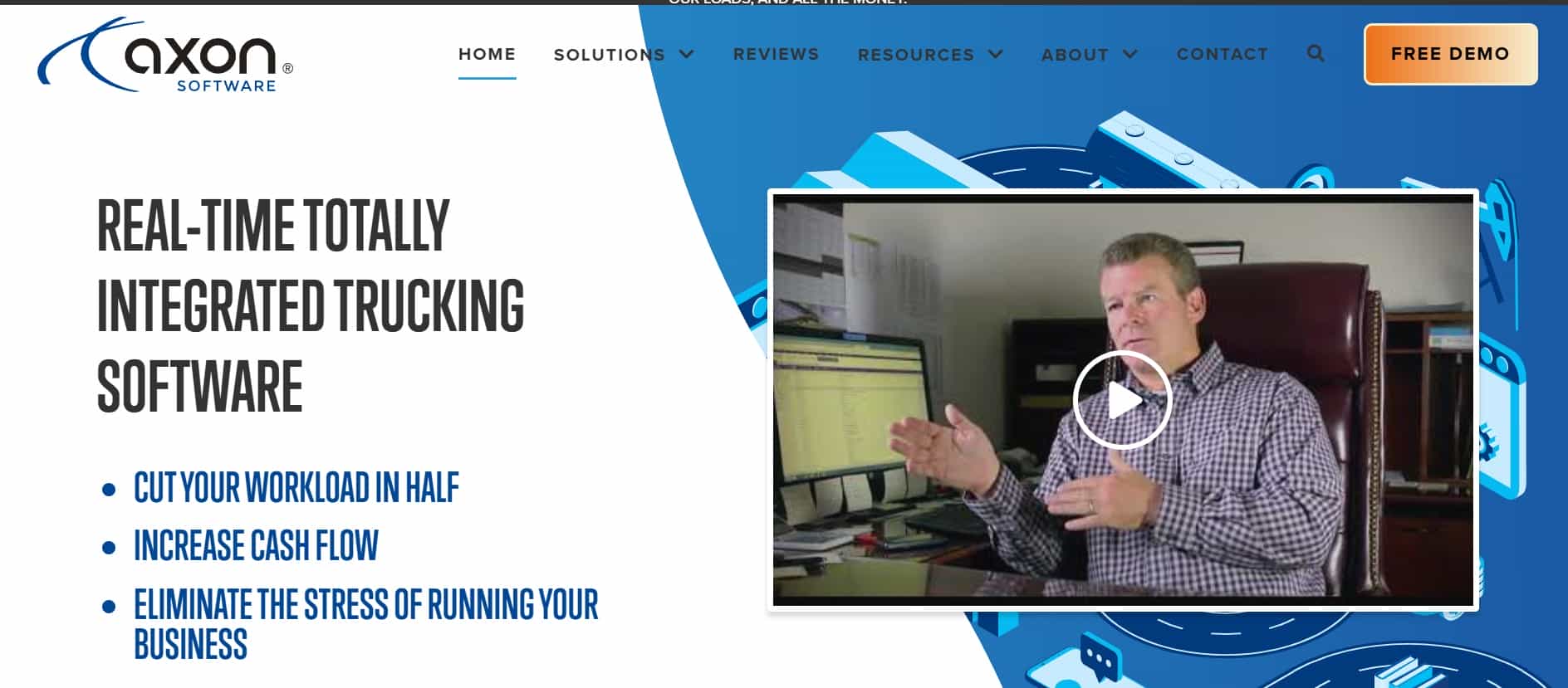
Overview: Axon combines trucking operations with accounting in one platform. Strong for mid-size carriers wanting integrated financials.
Advantages:
- Dispatch and accounting in one system
- Driver mobile app
- Good for trucking with mixed cargo
Considerations:
- Interface less modern than newer entrants
- Best for established operations, not startups
Best Fit: Mid-size carriers wanting unified operations plus accounting.
2. KeepTruckin (Motive)
Rating: 4.5 / 5 (G2)
Best For: ELD-first and fleet compliance operations
Implementation: 1 to 2 weeks
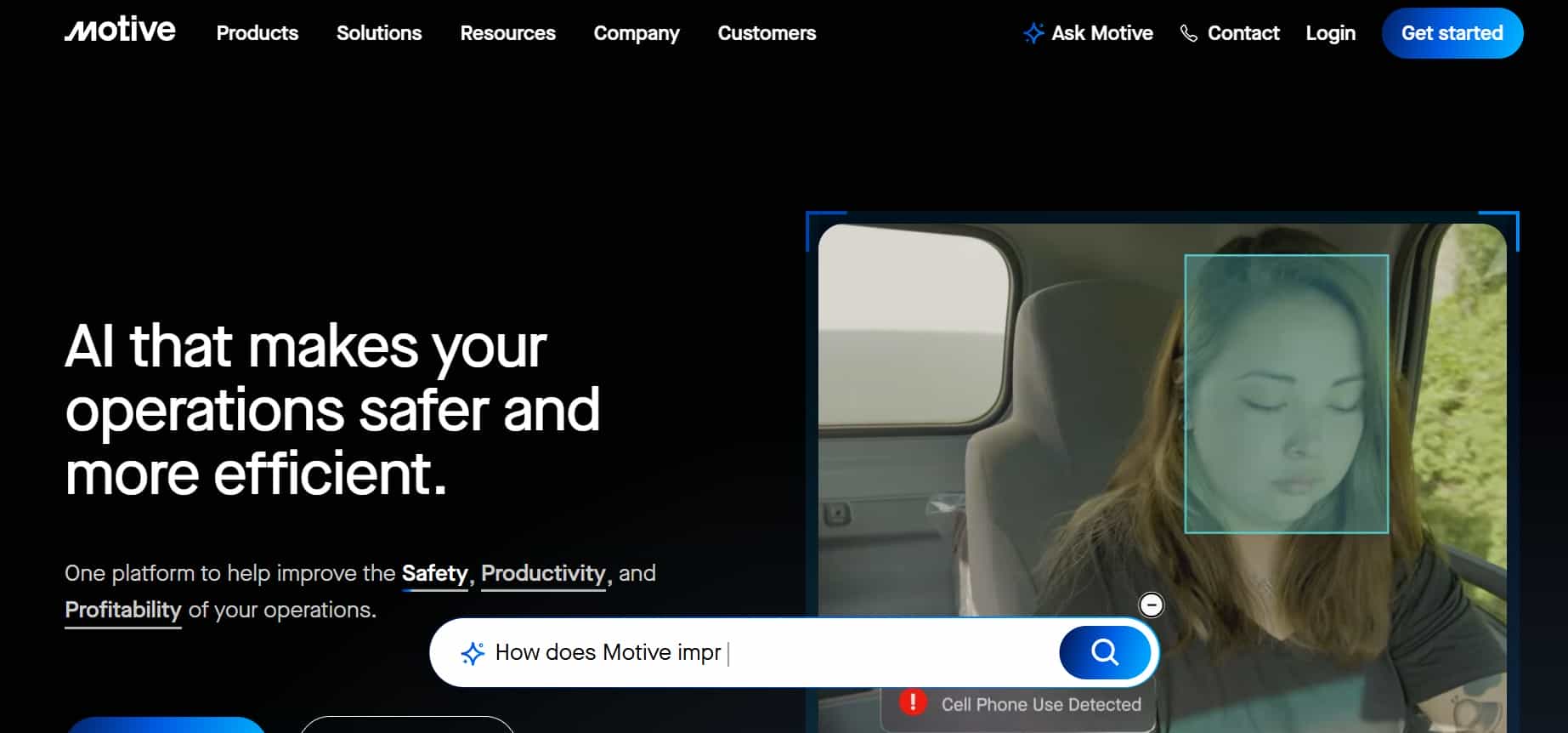
Overview: KeepTruckin (rebranded as Motive) started as an ELD provider and expanded into fleet management and TMS. Strong fit if ELD compliance and driver safety are primary needs.
Advantages:
- Industry-leading ELD
- Driver safety scoring and coaching
- Fuel card integration
- Fast implementation
Considerations:
- TMS functionality less mature than dispatch specialists
- Pricing scales with fleet size and features
Best Fit: Carriers where ELD, safety, and fleet visibility are primary needs.
3. McLeod Software

Rating: 4.2 / 5 (G2)
Best For: Large carriers (100+ trucks)
Implementation: 6 to 12 months
Overview: McLeod has been serving trucking companies since 1985. The platform is comprehensive but complex, and works best at larger scale.
Advantages:
- Industry-standard for large carriers
- Deep functionality across dispatch, accounting, maintenance
- Multi-terminal support
- Extensive integration ecosystem
Considerations:
- Long implementation timelines (6 to 12 months)
- Interface shows its age
- Overkill for carriers under 50 trucks
- High total cost of ownership
Best Fit: Large carriers (100+ trucks) with dedicated IT resources.
4. Samsara
Rating: 4.5 / 5 (G2)
Best For: Fleet visibility and safety
Implementation: 2 to 4 weeks
Overview: Samsara leads in fleet telematics and AI-powered dash cams. TMS features have expanded, but the core strength remains visibility and safety.
Advantages:
- Industry-leading AI dash cams and driver safety
- Real-time fleet visibility
- Strong mobile apps
- Modern interface
Considerations:
- TMS and dispatch less mature than pure TMS platforms
- Higher price point than basic TMS
- Best when safety and visibility are primary drivers
Best Fit: Carriers prioritizing safety, visibility, and driver coaching.
5. TruckingOffice
Rating: 4.6 / 5 (Capterra)
Best For: Owner-operators and small carriers (1 to 25 trucks)
Implementation: 1 week
Overview: TruckingOffice is built for owner-operators and small carriers who need affordable, simple software for dispatch, invoicing, and IFTA reporting.
Advantages:
- Affordable pricing for small operations
- Simple interface, fast onboarding
- IFTA reporting built-in
- Load board integration
Considerations:
- Limited features for larger fleets
- Basic fleet management
- Not designed for carriers over 25 trucks
Best Fit: Owner-operators and small carriers needing basic, affordable dispatch and billing.
Quick Comparison: Trucking TMS Platforms
| Platform | Fleet Size Fit | Implementation | G2 Rating |
|---|---|---|---|
| Axon Software | 25 to 100 trucks | 4 to 8 weeks | 4.3 / 5 |
| KeepTruckin (Motive) | Any size, ELD-focused | 1 to 2 weeks | 4.5 / 5 |
| McLeod Software | 100+ trucks | 6 to 12 months | 4.2 / 5 |
| Samsara | Any size, safety focus | 2 to 4 weeks | 4.5 / 5 |
| TruckingOffice | 1 to 25 trucks | 1 week | 4.6 / 5 |
Essential TMS Features for Trucking Companies
Dispatch Management
- Load assignment and routing
- Driver availability and location
- Multi-stop route planning
- Real-time status updates
Driver Management
- Hours of service (HOS) tracking
- Driver scorecards and safety metrics
- Mobile apps for load updates and paperwork
- Training and compliance records
ELD Integration
ELD compliance is mandatory for most US commercial vehicles. Your TMS should either include ELD functionality or integrate with leading providers (Motive, Samsara, Garmin).
IFTA and Fuel Management
- Automated IFTA reporting by jurisdiction
- Fuel card integration
- Fuel tax calculations
- Cost-per-mile analysis
Fleet Maintenance
- Preventive maintenance scheduling
- Repair history tracking
- DVIR (Driver Vehicle Inspection Report) capture
- Parts and labor cost tracking
Accounting Integration
For small carriers, QuickBooks integration is often essential. For larger carriers, integration with enterprise accounting systems matters more.
How to Choose the Right Trucking TMS
Step 1: Assess Your Fleet Size
- 1 to 5 trucks: TruckingOffice or similar small-carrier solutions
- 5 to 25 trucks: KeepTruckin (Motive), TruckingOffice for basic, or Samsara for safety focus
- 25 to 100 trucks: Axon, KeepTruckin (Motive), or Samsara
- 100+ trucks: McLeod Software or Axon for enterprise scale
Step 2: Identify Your Primary Need
- ELD compliance first? KeepTruckin (Motive)
- Fleet safety and visibility? Samsara
- Simple dispatch and billing? TruckingOffice
- Unified operations plus accounting? Axon
- Enterprise scale? McLeod
Step 3: Evaluate Integration Requirements
Most carriers need ELD, fuel card, accounting, and load board integrations. Verify your candidate TMS integrates with your specific providers before committing.
Step 4: Consider Growth
If you plan to grow from 10 to 50 trucks over the next 3 years, choose a platform that scales with you. Switching TMS is painful and expensive.
Common Mistakes to Avoid
- Buying enterprise software as a small carrier (6 to 12 month implementations, features you will not use)
- Choosing a basic tool when you will grow past it within 12 months
- Ignoring ELD integration in favor of cheaper options
- Not checking references from carriers your size
If You Also Move International Freight
Operating ocean or air freight alongside your trucking business? Drayage carriers, intermodal operators, and hybrid forwarder-carriers often run a trucking TMS for their fleet plus a forwarder TMS for ocean and air shipment management. The trucking platforms in this list do not cover international workflows like House Bills of Lading, customs filing (AES, ISF), or air waybills. If that describes your operation, see Best TMS Software for Forwarders 2026 for purpose-built forwarder platforms you can pair with your trucking TMS.
Frequently Asked Questions
What is the best TMS for trucking companies?
The best TMS depends on fleet size and primary need. For owner-operators and small carriers (1 to 25 trucks), TruckingOffice offers affordable simplicity. For ELD-first operations, KeepTruckin (Motive) leads. For fleet safety and visibility, Samsara dominates. For mid-size carriers wanting integrated accounting, Axon is a strong fit. For large carriers (100+ trucks), McLeod Software is the industry standard.
How much does trucking TMS software cost?
Trucking TMS pricing varies widely. Owner-operator tools like TruckingOffice start around $20 to $50 per truck per month. ELD-integrated platforms (KeepTruckin, Samsara) range $30 to $100 per truck per month depending on features. Enterprise platforms like McLeod run $100 to $300+ per truck per month plus implementation fees of $50,000 or more.
Do I need a separate ELD and TMS?
Not necessarily. KeepTruckin (Motive) and Samsara include ELD functionality alongside TMS features. Standalone TMS platforms like TruckingOffice or Axon typically integrate with third-party ELD providers. The right choice depends on whether you want one vendor or prefer best-of-breed integrations.
What is the difference between trucking TMS and freight forwarder TMS?
Trucking TMS focuses on the asset-based carrier workflow: dispatch, driver management, ELD, fleet maintenance, and IFTA reporting. Freight forwarder TMS focuses on multi-party shipment coordination: quoting, booking, customs filing (AES, ISF), customer portal, and international documentation. They solve different problems and are not interchangeable.
How long does trucking TMS implementation take?
Modern platforms like TruckingOffice and KeepTruckin deploy in 1 to 2 weeks. Mid-size platforms like Axon and Samsara take 2 to 8 weeks. Enterprise platforms like McLeod take 6 to 12 months. Most small and mid-size carriers can be fully operational within 30 days on a cloud-based TMS.
Can I switch trucking TMS software later?
Yes, but switching becomes more disruptive as you scale. Historical data migration, driver retraining, and integration rewiring all add to the cost. Starting with a platform that fits your projected 3-year operating size prevents most switching pain.
Related Content
- Best TMS Software 2026 for freight forwarder platforms
- Best Freight Management Software 2026
- Best TMS for Small Business 2026
- Descartes Alternatives: Top Freight Software Competitors 2026
Sources: G2 and Capterra ratings (March 2026), vendor published product pages and case studies.